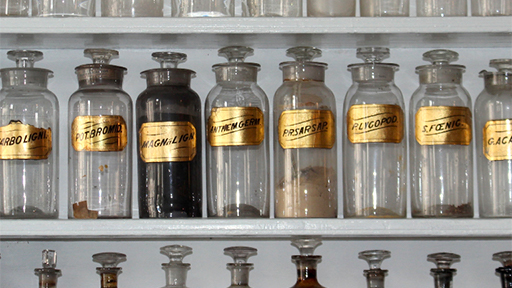
A spoonful of sugar may make the medicine go down, but when alcohol and cocaine are among the chief ingredients, patent medicines of yesteryear went down fine on their own — until they killed you.
While global leaders like Donald Trump and Andry Rajoelina, the president of Madagascar, have been promoting unproven and potentially dangerous miracle cures to coronavirus — from chloroquine and bleach to herbal remedies — pharmaceutical companies and salesmen have peddled experimental and under-tested drugs for generations. Many of which have caused irreparable harm. Common “secret ingredients” in nineteenth century patent medicines included heroin, cocaine and alcohol — with that mix, what could go wrong?
Lots, as it turns out. From birth deformities to necrotic flesh and death, many medicines from the last 200 years have proven to be very bad ideas.
1. Forced March: this tonic, sold in a simple glass bottle in the early 20th century, promised to prolong powers of endurance and curb appetite “when undergoing continued mental strain or physical exertion.” Its active ingredients — caffeine and cocaine. It’s no surprise then, that Ernest Shackleton and Robert F. Scott are both said to have carried it with them on their Antarctic expeditions.
(Left) “Forced march” tabloid brand, Burroughs Wellcome Co. Credit: Wellcome Library, London. Wellcome Images. (Right) Frank Wild and Ernest Shackleton on Shackleton’s last antarctic expedition 1914-1917. Credit: F. Hurley.
2. Thalidomide: intended as a sedative and treatment for morning sickness, this German pharmaceutical led to birth defects including deafness, blindness and missing limbs, and more than 10,000 fetal deaths in the 1950s and 1960s. Although the medicine was tested on rats, and found to be safe as its developers were unable to “find a dose high enough to kill a rat,” it turns out that, surprisingly, humans and rats have very different biology when it comes to certain chemical compounds.
(Left) Packet of Thalidomide tablets circa 2006. Credit: Stephencdickson. (Centre) John Marshall, born 1959 in USA. Congenital malformation of the feet from effects of Thalidomide. Credit: Otis Historical Archives of the National Museum of Health and Medicine in Washington D.C. (Right) Photograph of Terry Wiles (right) who was born with phocomelia due to Thalidomide, circa 1972. Credit: Terry Wiles
3. Fen-Phen: popular amongst millions of Americans in the 1990s, this diet pill combined an appetite suppressant with an amphetamine which led to rapid weight loss. Unfortunately, this came at the cost of causing serious heart valve abnormalities which resulted in thousands of hospitalizations and deaths. In 1998 a class action lawsuit was filed against the manufacturers with more than 175,000 claimants. Wrongful death cases are still being filed and paid out to this day.
4. Diamorphine: in the late 1880s, diamorphine, or Heroin as it was coined by Bayer, was introduced to the pharmaceutical market as an allegedly non-addictive substitute for morphine. This new medicine was often used to treat a cough. Unfortunately, over-the-counter Heroin proved to be nearly twice as addictive as morphine, and has markedly contributed to the ongoing global opioid epidemic.
(Left) Bayer heroin bottle, originally containing 5 grams of Heroin substance. Credit: Mpv_51. (Right) Old advertisement for Bayer pharmaceuticals, uses pre-1904 company logo. Public Domain.
5. Fowler’s Solution: this solution of potassium arsenic was used to treat malaria, syphilis, and even leukemia. It was even reportedly used by Charles Darwin and Karl Marx, much to their misfortune, as side effects included cirrhosis of the liver, hypertension, bladder and skin cancers — symptoms consistent with long-term arsenic poisoning.
6. Tapeworms: these “friends for a fair form,” as they were described in advertisements, were marketed as a weight loss remedy in the 19th century. However, the Worm Clinic in Mexico continues to provide this so-called therapy. People looking to lose weight take pills containing tapeworm eggs or cysts, with the hope that the worm would hatch and live within their intestines; this would, in theory, allow the person to eat to their heart’s content, and the parasitic worm would do the same — if only the invertebrate had a heart. Side effects from eating these squirmy creatures range from abdominal pain and vitamin deficiencies to brain inflammation, seizures and dementia.
(Left) Advertisement for sanitized tape worms (Weight-Loss Ad FDA154). Credit: The U.S. Food and Drug Administration. (Right) Tapeworm scanning electron microscope image. Credit: Mogana Das Murtey and Patchamuthu Ramasamy.
7. Radithor: marketed as a “cure for the living dead” and “perpetual sunshine”, this tonic used as a stimulant and aphrodisiac contained two radium isotopes. The radioactive nature of this largely unproven beverage led to radium poisoning, tooth and bone decay and loss, and an early death — followed by the need to be buried in a lead coffin to prevent radiation leaching into the soil. You’ll forgive us if we stick with regular old coffee instead.
(Left) Bottle of Radithor, Credit: Sam LaRussa. (Right) Newspaper clippings and advertisements for Radiator. Credit: The U.S. Food and Drug Administration.
8. Piso’s Cure: known to be a remedy for coughs, colds and consumption (tuberculosis), this medicine counted amongst its ingredients cannabis and chloroform. Although the former is relatively harmless, the latter is known to cause kidney and liver failure.
Ad for Piso’s Cure, circa 1893. Credit: Miami U. Libraries – Digital Collections
9. Mrs. Winslow’s Soothing Syrup: this mixture, which contained morphine and alcohol, was marketed to 19th century mothers and nannies in order to calm fussy children. But its opiate content was so high, that one teaspoon contained enough morphine to kill a child; thus, it earned its affectionate nickname: “the baby killer” and is likely to have killed thousands of young children.
Newspaper advertisement for Mrs. Winslow’s Soothing Syrup, circa 1876. Credit: University of Washington Special Collections.
10. Jems: sold as aphrodisiac “sex energiser nature pep tablets for married men and women” in the 1960s. These pills contained small doses of strychnine — a highly toxic ingredient most often found in rat poison. Side effects included cold sweats, loss of consciousness, elevated heart rate, and, if taken in a dose of five milligrams or more, death. The manufacturer was eventually sued but not for the inclusion of strychnine; instead, consumers took issue with the pills false-promise of delivering sexual benefits.
Subtitle
Title
Description
Credit: “Quackery” Workman Publishing, Public Domain.